Why Are My Legs Swelling? Vein Answers for St. Augustine
What causes leg swelling?
Leg swelling happens when fluid builds up in the tissues of your lower legs, and it has many possible causes — from simple things like sitting or standing too long to vein problems, medication side effects, and conditions affecting the heart, kidneys, or liver. Most everyday swelling is not an emergency, but a specific pattern — sudden swelling in one leg with pain, warmth, or redness — can signal a blood clot and needs urgent care. Because the causes range from harmless to serious, swelling that is new, persistent, or one-sided is worth having evaluated.
Doctors call fluid-related swelling edema. Gravity pulls fluid toward your feet and ankles across the day, which is why so many people notice puffiness by evening that eases overnight. That daily rhythm is a useful clue, but it does not tell you the underlying reason on its own.
The most common causes of swollen legs
Leg swelling usually traces back to one of a handful of sources, and sometimes more than one is at play.
- Chronic venous insufficiency (CVI). This is one of the most common reasons for ongoing leg swelling. When the one-way valves in your leg veins weaken, blood pools instead of flowing efficiently back to the heart. The rising pressure pushes fluid out into the tissues, often with aching, heaviness, and swelling that worsens through the day and improves when you elevate your legs.
- Prolonged sitting or standing. Long flights, desk work, or shifts on your feet let fluid settle in the lower legs. This kind of swelling is usually temporary and eases once you move around and elevate.
- Certain medications. Some blood pressure drugs — especially calcium channel blockers like amlodipine — commonly cause ankle and lower-leg swelling. Some anti-inflammatories, steroids, hormones, and diabetes medicines can too. If swelling started after a new prescription, mention it to your prescriber; do not stop a medication on your own.
- Pregnancy. A growing uterus presses on the pelvic veins and the body holds extra fluid, so mild swelling in both legs is common. Sudden or severe swelling, especially with headache, vision changes, or high blood pressure, needs prompt attention.
- Heart, kidney, or liver conditions. These affect the body’s whole fluid balance and tend to cause swelling in both legs. Heart-related swelling may come with shortness of breath; kidney or liver issues can bring puffiness elsewhere, such as the abdomen or around the eyes. Because these causes can be serious, new or worsening swelling in both legs deserves evaluation rather than reassurance.
- Lymphedema. When the lymphatic system cannot drain fluid well, swelling builds — often including the top of the foot and toes — and the skin can feel firm or thickened over time.
- Injury. A sprain, strain, fracture, or infection causes localized swelling in the hurt area, usually with pain, bruising, or tenderness right where the injury is.
The honest takeaway: leg swelling is a symptom, not a diagnosis. Not all of it is venous, and pinning down the cause is what points you toward the right next step.
Is swelling of the legs dangerous?
Most leg swelling is uncomfortable rather than dangerous, but some patterns deserve real caution — and even gradual swelling in both legs is not automatically harmless. The key is to notice how the swelling behaves and to have it checked when the cause is unclear.
Swelling in both legs that builds gradually through the day and eases with elevation overnight often points toward vein issues, medications, or lifelong positioning habits — but the same pattern can also be an early sign of a heart, kidney, or liver condition. So while it is frequently benign, bilateral swelling is not something to simply dismiss, especially if it is new, steadily worsening, or paired with breathlessness or weight gain.
Features that warrant prompt medical evaluation — not necessarily an emergency, but soon — include swelling that appears with skin changes near the ankle (brown discoloration or hardening), a non-healing sore, swelling that keeps worsening, or swelling alongside significant shortness of breath, which can point to a heart or lung cause.
Why is only my left (or one) leg swelling?
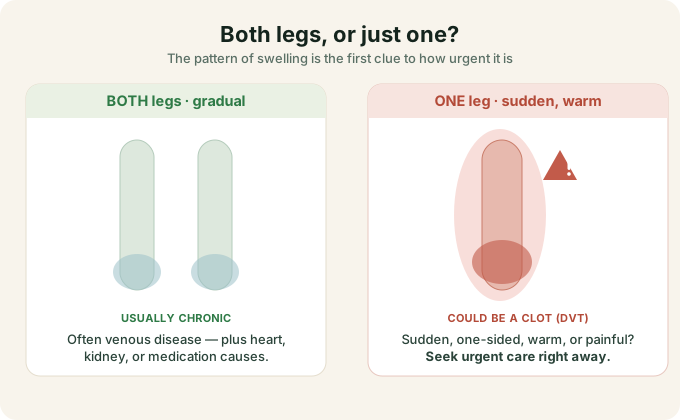
Swelling confined to one leg is different from swelling in both, and it deserves closer attention. When both legs swell, the cause is more often systemic — something affecting the whole body, like a medication, pregnancy, or a heart, kidney, or liver condition. When only one leg swells, the cause is more often local to that leg: a vein problem on that side, an injury, an infection, or lymphatic drainage trouble.
There is one urgent reason one leg can swell that you should never dismiss: a deep vein thrombosis (DVT), a blood clot in a deep leg vein.
Seek emergency care right away — call 911 or go to the emergency room — for sudden swelling in one leg with pain, warmth, redness, or tenderness, especially in the calf. This pattern can signal a DVT, which is a medical emergency because a piece of the clot can travel to the lungs. Warning signs that a clot may have reached the lungs — sudden shortness of breath, sharp chest pain that worsens when you breathe, a racing heartbeat, coughing up blood, or feeling faint — are emergencies too, even without obvious leg symptoms. When in doubt, get evaluated; a one-sided, sudden, painful swollen leg is the scenario that most warrants caution.
There is also an anatomical reason the left leg can swell more than the right: the left leg’s main vein passes under an artery in the pelvis, which can slow drainage on that side (sometimes called May-Thurner anatomy). This can contribute to everyday swelling, but the same compression is also a recognized risk factor for clots in the left leg — so it is not a purely benign explanation. Your provider can help sort a low-concern cause from a serious one — that distinction is not something to guess at from home.
How to reduce swelling in legs quickly
For everyday swelling that is not a red-flag situation, several simple measures can bring relief. Think of these as symptom management, not a cure — they ease the fluid but do not fix an underlying cause like faulty vein valves. And if you have not yet had unexplained swelling evaluated, it is worth checking with your provider before starting, because a few of these steps are not safe for everyone.
- Elevate your legs above the level of your heart for 15–20 minutes a few times a day. Propping your feet on pillows while lying down lets gravity help drain the fluid. If you have known or suspected heart failure, ask your provider first, since shifting fluid back toward the heart is not always appropriate.
- Move and walk. Your calf muscles act as a pump that pushes blood and fluid upward. Regular walking and ankle circles during long periods of sitting keep that pump working.
- Wear compression stockings. Graduated compression gently squeezes the lower leg to support venous return and limit pooling. Check with your provider before starting, though: compression is not right for every situation and can be harmful if you have significant peripheral arterial disease or reduced blood flow to the legs, so this should be confirmed first.
- Lower your salt intake. Excess sodium makes the body hold onto fluid, so trimming processed and salty foods can reduce puffiness.
- Stay hydrated and keep moving through the day, particularly in Northeast Florida’s heat, where warm weather and long hours on your feet can make legs feel heavier by evening.
If these help temporarily but the swelling keeps coming back, that recurrence is itself a signal worth investigating.
When leg swelling points to your veins — and how it’s checked
When swelling clusters in the lower legs and ankles, worsens with standing, improves with elevation, and comes with heaviness or aching, veins are a leading suspect. Understanding the range of causes behind leg swelling is the first step; the next is finding out which one applies to you.
The main tool is a duplex venous ultrasound — a comfortable, in-office scan that uses sound waves, with no needles and no radiation, to watch blood flow in your leg veins in real time. It shows where valves are leaking and helps evaluate for a deep clot. Ultrasound is very good at detecting clots in the larger deep veins of the leg, but it is less reliable for clots in the calf veins, pelvis, or abdomen. That means a normal scan does not always fully rule out a clot, so if your symptoms persist your provider may repeat the study or recommend further testing.
That scan is also how a clinician determines whether your swelling reflects chronic venous insufficiency, the progressive vein condition behind much long-standing leg swelling. At a physician-supervised clinic serving St. Johns, St. Augustine, Nocatee, Julington Creek, Jacksonville, and the surrounding communities, that evaluation is what allows any plan to be individualized — matched to the actual cause rather than a one-size-fits-all guess. And if your swelling is ever sudden, one-sided, and painful, treat that as an emergency and seek care right away.
Care is provided at our St. Johns County office in the Durbin Park area — serving Jacksonville, St. Johns, Ponte Vedra, Mandarin, Durbin, Silverleaf, Nocatee, Julington Creek, Fleming Island, and St. Augustine.
Keep reading
Ready to talk it through with a vein specialist?
Cristal Boatright, PA-C reviews your history and maps a plan built on real diagnostics — not a template.
Book a consultationOr call/text (904) 310-7186.
Sources & further reading
- Chronic venous insufficiency — Miami Vein Center
A leading vein cause of leg swelling.
- Vascular lab & duplex ultrasound — Miami Vein Center
How swelling from vein disease is diagnosed.