What Causes Varicose Veins? A Ponte Vedra Vein Specialist Explains
What Causes Varicose Veins?
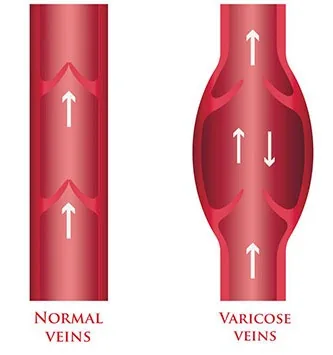
Varicose veins usually develop from a problem called venous reflux, in which blood that should flow up toward your heart leaks backward and pools in the vein. This often involves the tiny one-way valves inside your leg veins failing to close properly, though weakening and stretching of the vein wall itself can be part of the picture too — and researchers still debate which comes first. Either way, the trapped blood raises pressure inside the vein (a state called venous hypertension), and over time the vein stretches, twists, and bulges into the rope-like cords you can see near the surface of the skin. Varicose veins can be a visible sign of an underlying condition called chronic venous insufficiency, though not everyone with them meets the criteria for that diagnosis.
To picture why this happens, it helps to remember what your leg veins are up against. When you stand, blood in your legs has to travel a long way uphill against gravity to return to your heart. Healthy veins manage this with two tools: the squeezing action of your calf muscles, which acts like a pump, and a series of small valves spaced along the vein that snap shut after each pulse of blood moves upward, preventing backflow. When those valves stop closing properly, gravity wins. Blood slides back down, collects in the lowest sections of the vein, and the constant pressure gradually deforms the vein wall.
What Causes Varicose Veins in the Legs Specifically?
Varicose veins show up in the legs far more than anywhere else for a simple reason: your legs sit farthest from your heart and carry the greatest gravitational load. Every hour you spend upright adds pressure to the veins in your calves and thighs, so this is where valves are most likely to fatigue and fail first.
Several things make that failure more likely. The most common contributors include:
- Family history – one of the strongest risk factors (more on this below).
- Being female – women more often report symptoms and seek treatment for varicose veins, though the population data on who develops them is actually mixed.
- Pregnancy – a combination of hormonal shifts, a larger blood volume, and pressure from the growing uterus on the pelvic veins.
- Age – vein walls and valves naturally lose some elasticity over the years.
- Prolonged standing or sitting – long motionless stretches keep the calf-muscle pump idle, so blood lingers in the veins.
- Excess weight – added load raises pressure in the leg veins.
- A prior leg injury or a past blood clot – either can damage a vein or its valves directly.
- Hormonal changes – shifts tied to pregnancy, hormone therapy, or other causes can affect vein tone.
Most people who develop varicose veins have more than one of these factors stacked together. Having a risk factor does not mean you are destined for problem veins, and not having one does not fully protect you.
Are Varicose Veins Genetic or Hereditary?
Family history is one of the strongest factors we know of. If one or both of your parents had varicose veins, your own likelihood of developing them rises considerably. What you inherit is the underlying tendency, such as the structure and strength of your vein walls and valves, rather than the specific veins themselves.
This is why some people develop bulging veins in their twenties despite staying active and at a healthy weight, while others never do even after decades of standing work. If varicose veins run in your family, it is reasonable to pay closer attention to early signs and to talk with a provider sooner rather than later. A family pattern does not lock in a bad outcome, but it does mean monitoring deserves more of your attention.
What Do Varicose Veins Look Like?
Varicose veins are usually raised and rope-like, sitting up above the skin’s surface, and they tend to look blue or purple, sometimes with a greenish tint showing through the skin. They most often appear on the calves, the backs of the knees, and the inner thighs, and they may look twisted or knotted rather than straight.
Just as important is how they feel. Many people notice symptoms before the veins become dramatic, including:
- Aching, throbbing, or a heavy, tired feeling in the legs
- Swelling around the ankles, especially by the end of the day
- Itching or a burning sensation over or near a vein
- Cramping in the legs, particularly at night
- Skin changes near the ankle, such as darkening or dryness
That last point deserves special attention. Persistent darkening, hardening, or dry, inflamed skin around the ankle can be a sign of more advanced chronic venous insufficiency and may precede a venous ulcer. If you notice those changes, they are a reason to be evaluated promptly rather than something to watch and wait on.
How varicose veins differ from spider veins
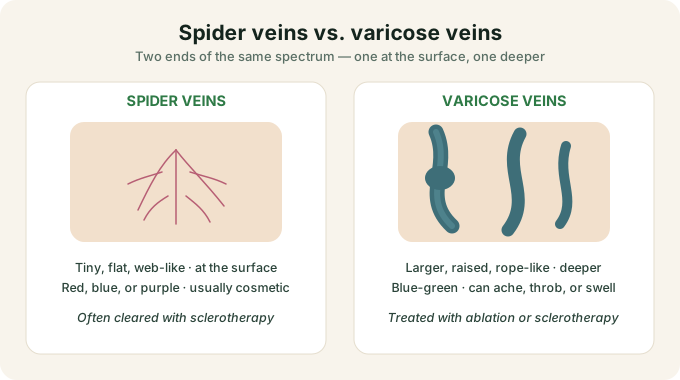
Varicose veins are different from spider veins. Spider veins are much smaller, flat, thread-like red, blue, or purple clusters that sit right at the skin’s surface in a web or branch pattern — you can see them but you cannot feel them raised under your fingers the way you can a varicose vein. Varicose veins, by contrast, are larger, bulge up off the skin, and can be felt as a soft, ropey cord. The two often appear together, and both can point to the same underlying valve issue. If you want a fuller rundown of symptoms and when they warrant an evaluation, our Jacksonville varicose veins guide walks through what to watch for and how treatment works.
When leg swelling is an emergency, not a vein problem
The aching and gradual, both-sided swelling of varicose veins usually build slowly. A very different pattern deserves urgent attention. Sudden swelling in one leg, often with calf pain or tenderness, warmth, or redness, can signal a deep vein thrombosis (DVT) — a blood clot in a deep leg vein. That is not a “have your veins looked at when convenient” situation; it needs emergency evaluation right away, because a clot can travel to the lungs. If you develop chest pain or shortness of breath along with leg symptoms, call emergency services. When in doubt about sudden, one-sided leg swelling, err on the side of getting seen urgently.
Do Varicose Veins Go Away on Their Own?
Generally, no. Once a vein’s valves have failed and the vein has stretched and bulged, it does not repair itself or shrink back to normal without treatment. The underlying reflux is a mechanical problem, and it tends to stay the same or slowly progress rather than resolve.
There is one common exception worth naming: varicose veins that appear during pregnancy often improve in the months after delivery, as blood volume and hormone levels return toward baseline. Even then, some veins persist, and pregnancy can unmask a tendency that shows up again later. If your veins are causing symptoms or steadily worsening, an evaluation is the right next step rather than waiting for them to fade.
The encouraging news is that today’s options are far gentler than the vein-stripping surgery of the past. Minimally invasive approaches such as radiofrequency ablation close the failing vein from the inside through a tiny access point, letting your body reroute blood through healthy veins nearby. Which approach fits you is an individualized decision your provider can help determine after a proper evaluation, often including an ultrasound to map how your veins are actually flowing.
How to Prevent Varicose Veins
Here it helps to be honest about what lifestyle can and cannot do. Because genetics plays such a large role, no habit can fully override your inherited tendency, and the evidence that any routine reliably prevents new varicose veins from forming is limited. What these measures may do is keep blood moving, ease symptoms like aching and heaviness, and take some of the pressure off veins that already feel worse by day’s end. They are not a substitute for evaluation if you have symptoms, but for many people they can help the legs feel better day to day.
Practical steps worth building in:
- Move regularly. Walking, cycling, and swimming all engage the calf-muscle pump. If your job keeps you seated or standing, shift position and take short walking breaks through the day.
- Break up long motionless stretches. On a long flight or drive, flex your ankles and stand when you can.
- Wear compression stockings if a provider recommends them; for many people graduated compression can ease aching and heaviness by supporting circulation in the legs.
- Elevate your legs above heart level for a few minutes when you can, especially after a long day on your feet.
- Manage your weight, which can reduce the load on your leg veins.
- Stay hydrated and keep moving during pregnancy, and ask your provider about compression if veins appear.
For many people in Northeast Florida, the warm, active outdoor lifestyle across St. Johns, Durbin, Nocatee, Ponte Vedra, and Jacksonville makes staying on your feet easy, which is good for circulation overall. The main thing to watch is the balance: long, motionless hours, whether standing at work or sitting at a desk, are what let blood pool. Build in movement, listen to how your legs feel, and if aching, heaviness, swelling, or visible bulging veins start to interfere with your day, that is a signal to have your veins looked at rather than something to push through.
Care is provided at our St. Johns County office in the Durbin Park area — serving Jacksonville, St. Johns, Ponte Vedra, Mandarin, Durbin, Silverleaf, Nocatee, Julington Creek, Fleming Island, and St. Augustine.
Keep reading
Ready to talk it through with a vein specialist?
Cristal Boatright, PA-C reviews your history and maps a plan built on real diagnostics — not a template.
Book a consultationOr call/text (904) 310-7186.
Sources & further reading
- Varicose veins: overview & treatment — Miami Vein Center
Our Miami sister practice's varicose vein overview.
- Chronic venous insufficiency — Miami Vein Center
The underlying valve disease behind most varicose veins.