What Causes Leg Cramps at Night? Answers for Nocatee & St. Johns
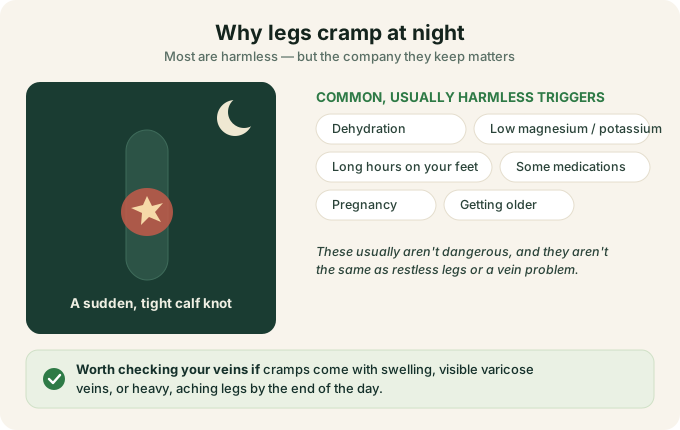
What causes leg cramps at night?
Nighttime leg cramps are often linked to everyday factors like dehydration, shifts in electrolytes (such as potassium, magnesium, or calcium), tired or overworked muscles, and long hours on your feet. In truth, though, most cramps have no clear identified cause, and in the majority of people they are harmless even when they are startling and painful. Less commonly, they can be a signal of an underlying issue with your circulation or nerves, which is worth paying attention to when the cramps travel with other symptoms.
A nocturnal leg cramp is a sudden, involuntary tightening of a muscle, usually in the calf, that seizes up while you are resting or asleep. The muscle may feel hard to the touch, and the soreness can linger into the next day. They tend to become more common with age and during pregnancy, and they can wake you repeatedly during a bad stretch.
The most common causes (and why the answer is often “unknown”)
For most people, no specific medical explanation is ever found. These “idiopathic” night cramps, meaning cramps without an identified cause, are common and generally not a sign of anything dangerous. That said, several everyday factors are commonly associated with them, and addressing what you can is reasonable:
- Dehydration and electrolyte changes. These are frequently blamed, though the evidence in otherwise-healthy people is debated. Still, sweating through a hot Northeast Florida summer, skimping on fluids, or losing minerals may leave muscles more prone to cramping for some.
- Muscle fatigue and overuse. A hard workout, a long walk, or a day of standing can leave calf muscles primed to seize up overnight.
- Prolonged standing or sitting. Jobs and routines that keep you in one position for hours can contribute.
- Pregnancy. Cramps are common, especially later in pregnancy, and usually ease afterward.
- Aging. Cramps become more frequent as we get older, in part due to natural changes in muscle and nerve function.
- Certain medications. Some diuretics and blood pressure drugs list muscle cramps among their possible effects; others, like statins, are more often tied to muscle aches than to true cramps. If you suspect a medication, talk to your prescribing provider rather than stopping on your own.
Where veins and circulation come in
Here is the connection that brings some people to a vein clinic. When the valves in your leg veins weaken and blood pools instead of flowing efficiently back to the heart, a condition called chronic venous insufficiency can develop. The evidence tying vein problems specifically to true muscle cramps is limited and mixed. What veins are more clearly connected to is a cluster of symptoms that often show up together: restless, heavy, tired, or achy legs that feel worse at the end of the day, along with a sense of nighttime discomfort that some people describe as cramping.
It is important to be honest here: a vein problem is not the most common cause of an isolated leg cramp, and cramps alone do not mean you have a circulation issue. The picture becomes more suggestive of a vein cause when that heavy, restless feeling shows up alongside other signs, such as visible varicose veins, leg swelling that worsens as the day goes on, or a tired ache in the legs. When your symptoms travel with that cluster, an evaluation can help sort out whether your veins are playing a role.
What night cramps are not
Two conditions are frequently confused with ordinary night cramps, and telling them apart matters:
- Restless legs syndrome (RLS) is a neurological condition, not a muscle cramp. RLS creates an uncomfortable urge to move the legs, often described as crawling or tingling, that is relieved by movement. A true cramp is a painful, visible muscle contraction. They can feel related, but they are different problems with different treatments.
- Arterial claudication is cramping or aching pain triggered by walking that eases when you stop and rest. This pattern can point to peripheral artery disease (PAD), a narrowing of the arteries that supply the legs. Cramping that reliably comes on with activity, rather than at rest, deserves a conversation with a doctor.
When to worry about leg cramps at night
Most night cramps are nothing to fear. But some patterns warrant attention, and a few call for prompt care:
- See a doctor urgently if a cramp or persistent calf pain comes with swelling, warmth, redness, or tenderness in one leg. These can be signs of a blood clot (deep vein thrombosis, or DVT), which needs to be ruled out quickly.
- See a doctor if your cramping is consistently brought on by walking and relieved by rest, which can suggest an arterial (PAD) issue.
- Consider a vein evaluation if cramps come alongside varicose veins, ongoing leg swelling, or skin changes near the ankles such as darkening or thickening.
- Check in with your provider if cramps are frequent, severe, disrupt your sleep regularly, or seem tied to a new medication.
If your legs are also swelling, aching, or showing prominent veins, a noninvasive vascular ultrasound is the standard way to look at how blood is moving through your veins and whether the valves are working as they should. It requires no special preparation and gives your provider a clear map of what is happening beneath the surface, so any treatment can be tailored to what your legs actually need.
How to stop and prevent night cramps
When a cramp hits, gently stretching and flexing the affected muscle usually helps it release. For a calf cramp, straighten your leg and pull your toes up toward your shin, or stand and press the heel down. Walking around and gently massaging the muscle can ease the residual soreness.
To lower how often cramps show up, most people do well by focusing on a few habits:
- Stay hydrated, especially in the Jacksonville and St. Johns heat and after exercise.
- Stretch your calves before bed and after activity.
- Stay active, but build up gradually so muscles are not suddenly overloaded.
- Adjust your position. Some people find relief keeping bedding loose so the feet are not pointed down all night.
- Move regularly if your day involves long stretches of standing or sitting.
You may see supplements like magnesium promoted for cramps. The evidence is mixed, and supplements can interact with medications or existing conditions, so talk with your provider before starting one rather than assuming it is right for you.
Occasional night cramps are a normal part of life for many people and rarely signal anything serious. The time to look closer is when the cramps keep company with swelling, visible veins, skin changes, or pain that shows up when you walk. In those cases, an evaluation can help determine whether your circulation is involved and what, if anything, is worth treating. Your provider can help you figure out where your symptoms fall and build a plan that fits your legs and your life here in Northeast Florida — whether you’re in Nocatee, Julington Creek, St. Johns, or Jacksonville.
Care is provided at our St. Johns County office in the Durbin Park area — serving Jacksonville, St. Johns, Ponte Vedra, Mandarin, Durbin, Silverleaf, Nocatee, Julington Creek, Fleming Island, and St. Augustine.
Ready to talk it through with a vein specialist?
Cristal Boatright, PA-C reviews your history and maps a plan built on real diagnostics — not a template.
Book a consultationOr call/text (904) 310-7186.
Sources & further reading
- Chronic venous insufficiency — Miami Vein Center
When poor vein circulation contributes to leg symptoms.
- Varicose veins: overview & treatment — Miami Vein Center
A visible sign that veins may be involved.