How to Get Rid of Spider Veins in Jacksonville: What Actually Works
How to Get Rid of Spider Veins
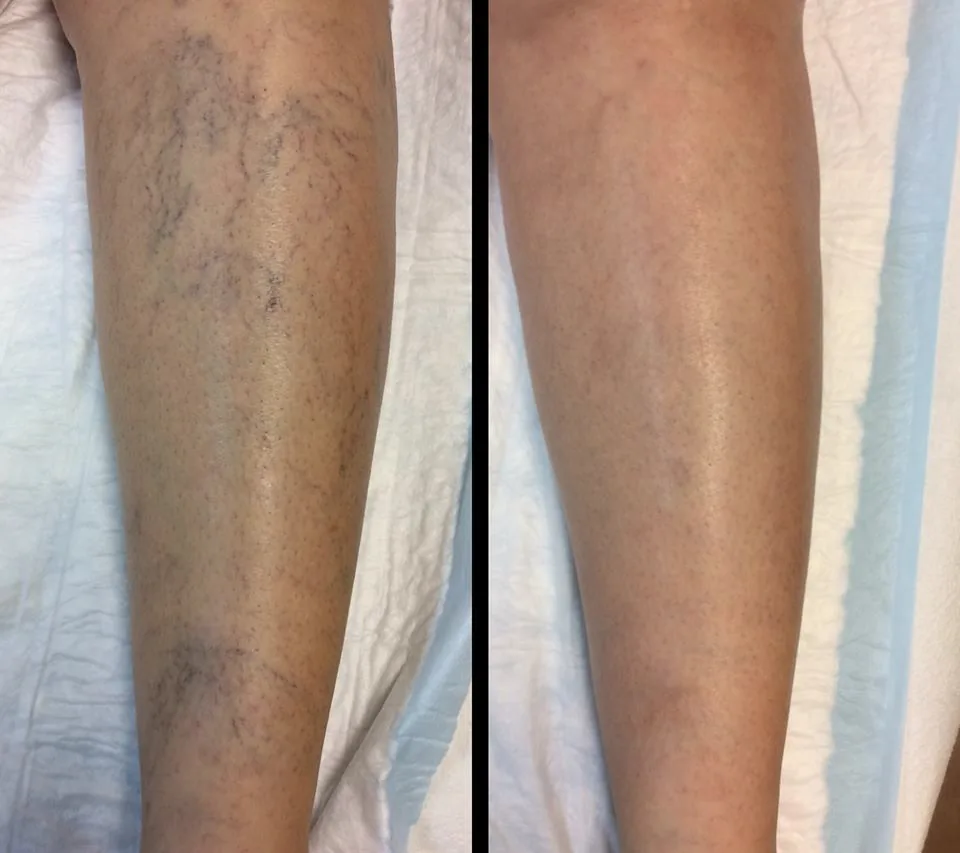
The most reliable way to get rid of spider veins is an in-office medical treatment. For veins on the legs, sclerotherapy is widely considered the gold standard: a provider injects a solution that irritates the vein wall so it collapses and gradually fades over several weeks. At-home habits like compression stockings, staying active, and elevating your legs can support overall vein comfort and ease symptoms, but they will not erase the ones you already have. If your goal is to clear existing spider veins, a professional evaluation is the place to start.
What Are Spider Veins?
Spider veins, known medically as telangiectasias, are tiny dilated blood vessels sitting just beneath the surface of the skin. They usually appear red, blue, or purple and form thin web-like or branching patterns, which is where the “spider” name comes from. Most often they show up on the legs, though they can also appear on the face, especially around the nose and cheeks.
For most people, spider veins are primarily a cosmetic concern. They’re smaller and flatter than varicose veins, which tend to bulge and rope under the skin. That said, some people do notice mild symptoms in the affected area, such as a dull ache, burning, itching, or a feeling of heaviness after long periods of standing. If you want a deeper look at how these vessels develop and what your options are, our spider veins guide for Jacksonville patients walks through the details.
What Causes Spider Veins?
Spider veins form when the small vessels near the skin’s surface dilate and become visible. There’s rarely a single cause; instead, a combination of factors — genetics, hormones, prolonged standing, age, and sun exposure chief among them — tends to make them more likely. Here’s how each one contributes:
- Genetics. A family history of spider or varicose veins is one of the strongest predictors. If your parents had them, you’re more likely to as well.
- Hormones and pregnancy. Hormonal shifts during pregnancy, from birth control pills, or around menopause can affect vein walls and valves. Pregnancy also increases blood volume and pressure in the leg veins, which is part of why spider veins are more common in women.
- Prolonged standing or sitting. Jobs and routines that keep you on your feet or seated for long stretches can increase pressure in the leg veins over time.
- Age. Vein walls and valves naturally lose some elasticity as you get older, making surface veins more visible.
- Sun exposure. On the face in particular, ultraviolet light can damage and dilate small vessels, contributing to visible telangiectasias.
- Weight. Carrying extra weight is a well-established risk factor for vein problems in general, and it may play a role for some people, though its specific link to spider veins is less clear-cut than for larger varicose veins.
Living in Northeast Florida, where sunny days are the norm year-round, sun protection is especially worth keeping in mind for facial vessels.
Do Spider Veins Go Away on Their Own?
Generally, no. Once spider veins have formed, they don’t usually fade or disappear without treatment. There is one common exception: spider veins that appear during pregnancy sometimes improve in the months after delivery as hormone levels and blood volume return to normal. Even then, many people find that some visible veins remain.
Because they rarely resolve on their own, the honest answer is that if a particular vein bothers you, waiting it out is unlikely to clear it. The good news is that treatment options are effective and typically done in a comfortable outpatient setting.
Are Spider Veins Dangerous?
In most cases, spider veins are not dangerous. For the majority of people they’re a cosmetic issue rather than a medical threat, and many live with them comfortably for years. The main reason to have them looked at is that, occasionally, spider veins on the legs can be a surface clue to something deeper worth evaluating.
First, one important safety point that isn’t about spider veins at all: sudden swelling in just one leg, especially with pain, warmth, tenderness, or redness in the calf or thigh, is not a spider vein problem and should be treated as urgent. Those can be signs of a deep vein thrombosis (a blood clot in a deeper vein), which needs prompt medical evaluation because a clot can travel to the lungs. If that happens, seek emergency care rather than waiting for a routine appointment.
Setting that aside, here’s the nuance specific to spider veins. Occasionally, spider veins on the legs can be a surface sign of a deeper problem called venous reflux, where the valves in larger veins aren’t keeping blood flowing efficiently back toward the heart. When that’s the case, treating only the visible surface veins may lead to disappointing or short-lived results, because the underlying pressure is still there. This is why a good clinic will evaluate your legs before cosmetic treatment, and sometimes recommend a quick ultrasound to check the deeper veins. Non-urgent signs worth mentioning to a provider include aching that worsens through the day, gradual swelling by evening, skin changes near the ankle, or a cluster of veins that keeps expanding.
How to Support Vein Health and Ease Symptoms
You can’t change your genetics, and genetics and hormones are among the strongest drivers of spider veins, so no habit can reliably keep new ones from appearing. What these steps can do is support your overall vein health and ease the symptoms that come with existing veins:
- Wear compression stockings. Graduated compression gently supports the leg veins and improves circulation, which can reduce aching and heaviness. Your provider can help you choose the right level.
- Stay active. Regular movement, especially walking, keeps the calf muscles pumping blood back up your legs. If you sit or stand for long stretches, take short breaks to move around.
- Elevate your legs. Putting your feet up above heart level for a while at the end of the day helps relieve pressure in the leg veins.
- Manage your weight. Keeping to a healthy weight reduces strain on your circulatory system and is good for vein health overall.
- Protect your skin from the sun. Sunscreen and sun-smart habits help limit the facial vessels that UV exposure can worsen.
Be honest with yourself about what these steps can and can’t do: they’re genuinely helpful for comfort and general vein health, but no cream, supplement, or home device can reliably erase spider veins that have already formed. Products that claim otherwise tend to overpromise.
How to Get Rid of Spider Veins on the Legs
When you’re ready to clear existing spider veins, professional treatment is the way to go. The main options are:
Sclerotherapy
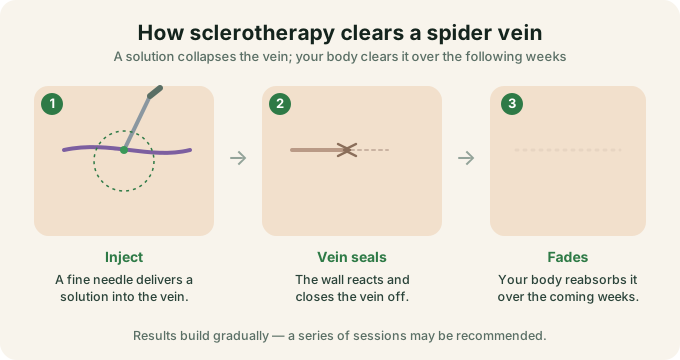
For leg veins, sclerotherapy is the most established treatment. A provider uses a very fine needle to inject a specialized solution directly into the spider vein. The solution irritates the vein’s inner lining, causing it to seal shut and collapse. Over the following weeks, your body gradually reabsorbs the closed-off vein, and it fades from view. Because results develop slowly and not every vein responds to a single treatment, most people need a series of sessions spaced a few weeks apart to get the clearance they’re after. Afterward, wearing compression stockings for a period usually helps the results along.
Laser Treatment
Laser therapy can be a good option for very fine vessels and for spider veins on the face, where injections are less practical. The laser delivers targeted energy that heats and closes the tiny vessel. As with sclerotherapy, results build gradually and more than one session may be needed depending on the number and size of the vessels.
Which approach fits you best depends on where your veins are, how large they are, and whether an evaluation turns up any underlying venous issue. There’s no single right answer for everyone, which is exactly why treatment plans are individualized and built after a provider actually looks at your legs.
What to Expect From an Evaluation
A thoughtful first step is a consultation where a provider examines the veins, asks about your symptoms and history, and determines whether the visible spider veins are purely cosmetic or connected to something deeper. If needed, an ultrasound can map the veins below the surface. From there, you and your provider can decide on a plan that matches your goals and your anatomy, with realistic expectations about how many sessions it may take and how your results will unfold over the weeks that follow.
For patients researching spider vein treatment in Jacksonville, St. Johns, Ponte Vedra, Nocatee, or St. Augustine, that evaluation happens at our St. Johns County office — with in-office sclerotherapy scheduled from there.
Care is provided at our St. Johns County office in the Durbin Park area — serving Jacksonville, St. Johns, Ponte Vedra, Mandarin, Durbin, Silverleaf, Nocatee, Julington Creek, Fleming Island, and St. Augustine.
Keep reading
Ready to talk it through with a vein specialist?
Cristal Boatright, PA-C reviews your history and maps a plan built on real diagnostics — not a template.
Book a consultationOr call/text (904) 310-7186.
Sources & further reading
- Spider veins: causes & treatment — Miami Vein Center
Spider vein overview from our Miami sister practice.
- Sclerotherapy — Miami Vein Center
How sclerotherapy clears spider and small varicose veins.