Are Varicose Veins Dangerous? When St. Johns Patients Should Worry
Are varicose veins dangerous?
Most varicose veins are not immediately dangerous, and many people live with them for years without a medical emergency. But they are usually a visible sign of underlying vein disease, and when left unevaluated they can slowly lead to complications. That is why varicose veins are worth having checked, even when they are mostly a cosmetic annoyance today. Below we walk through the real risks, whether these veins can cause blood clots, and exactly when to worry about varicose veins versus when they can safely wait for a routine visit.
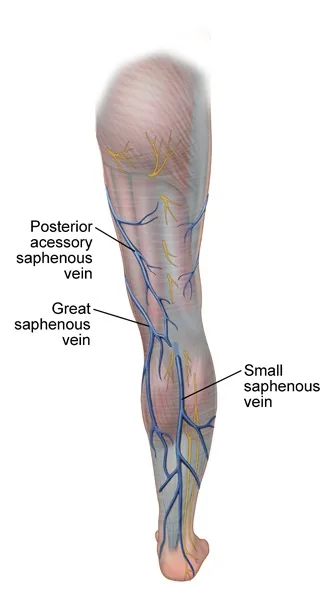
Those rope-like, bulging blue or purple veins form when the tiny one-way valves inside your leg veins stop closing properly. Blood that should travel up toward the heart leaks backward and pools, a process called venous reflux. Over time that pressure stretches the vein walls and produces the bulges you can see. The veins themselves are rarely a crisis, but the pressure behind them can affect your skin, comfort, and circulation as the years go on.
Do varicose veins hurt?
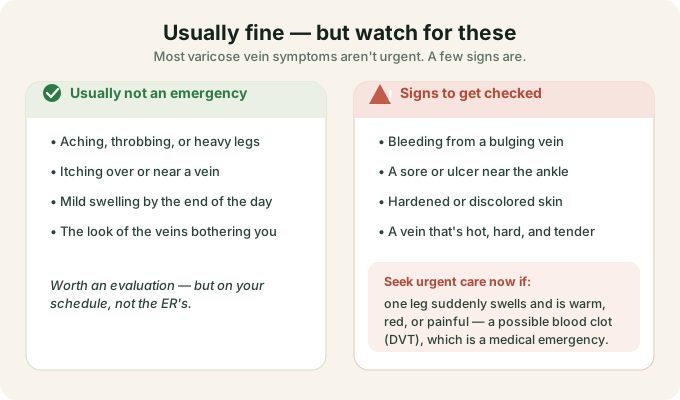
They can, though not everyone feels them. Some people have prominent veins with no symptoms at all, while others have relatively subtle veins that ache noticeably. When varicose veins do cause discomfort, people often describe a heavy, tired, or throbbing feeling in the legs, especially after a long day on your feet. That is a common experience in Northeast Florida, where warm weather and long hours standing can make legs feel worse by evening.
Typical symptoms can include:
- Aching, heaviness, or a “full” sensation in the calves
- Throbbing or cramping, sometimes worse at night
- Itching or a burning feeling over the vein
- Swelling around the ankle by the end of the day
- Restless or fidgety legs in the evening (venous disease can produce this kind of discomfort, though genuine restless legs syndrome is a separate neurologic condition)
Symptoms that improve when you lie down or raise your legs, and worsen when you stand, are classic for vein-related discomfort. If your legs regularly ache or swell, that is a reasonable reason to have your varicose veins evaluated rather than just waiting to see what happens.
What complications can develop over time?
Because varicose veins reflect ongoing pressure in the vein system, they can occasionally lead to problems if the underlying disease progresses. These complications are not inevitable, and many people never develop them, but they are the reason clinicians take vein disease seriously.
Possible complications include:
- Superficial thrombophlebitis — a clot combined with inflammation in a surface vein. The vein may become firm, red, warm, and tender to the touch, often like a tender cord under the skin. A short, small area can be minor, but an extensive or long segment of clot, or one high in the thigh near where the surface veins join the deep system, deserves a prompt ultrasound because it can extend into the deep veins.
- Spontaneous bleeding — a thin-walled vein sitting close to the surface can occasionally bleed after a minor bump, or even on its own. Because these veins are under pressure, bleeding can be surprisingly brisk and, in older adults or people on blood thinners, can rarely become serious.
- Skin changes near the ankle — long-standing pressure can cause darkening or brownish discoloration (hyperpigmentation) and hardening of the skin and underlying tissue (lipodermatosclerosis).
- Venous eczema — dry, itchy, inflamed patches of skin over the affected area.
- Venous leg ulcers — slow-healing open sores, usually near the inner ankle, that can develop after years of untreated venous disease and often need dedicated wound care.
Most of these develop gradually, which is exactly why an early evaluation matters. Catching reflux before the skin around your ankle starts to change gives you and your provider more options.
Can varicose veins cause blood clots?
This is where precision matters, because the honest answer is nuanced. Varicose veins are superficial veins, sitting close to the skin, so they do not directly cause a clot in the deep veins of the leg (deep vein thrombosis, or DVT) the way people sometimes fear.
That said, the relationship is not zero, and it is worth taking seriously. Varicose veins are considered a risk marker for venous blood clots: some large cohort studies have found that people with varicose veins carry a higher associated risk of DVT and other clotting problems, though the reasons are debated and other health factors likely play a role. On top of that, a clot in a superficial varicose vein (the superficial thrombophlebitis mentioned above) can occasionally extend toward the deep system. The balanced takeaway is that varicose veins are usually not the direct cause of a life-threatening clot, but they are not simply harmless surface vessels either, so new clot-like symptoms always deserve prompt attention rather than guesswork.
When to Worry About Varicose Veins
Most vein concerns can wait for a scheduled visit. A few, however, warrant faster action. Use this list of red flags as a guide, not a substitute for medical advice.
Seek urgent, same-day evaluation (call your provider or go to an urgent-care center or ER) for:
- Sudden swelling, pain, warmth, or redness in ONE leg. This pattern can signal a DVT, which needs prompt, same-day assessment and an ultrasound rather than waiting it out. Do not try to guess — get evaluated the same day so a clot can be ruled in or out and treated if needed.
Call 911 or go to the emergency room right away for:
- Signs a clot may have traveled to the lungs (pulmonary embolism). Sudden shortness of breath, chest pain that is sharp or worse when you breathe, coughing up blood, a racing heartbeat, or feeling faint are true emergencies. This can happen even without obvious leg symptoms, so call for emergency help immediately.
- A varicose vein that will not stop bleeding. Lie down, elevate the leg well above the level of your heart, and apply firm, steady, continuous pressure with a clean cloth. If the bleeding does not stop quickly with pressure, or if it is heavy, call emergency services or go to the ER — vein bleeding is pressurized and, in older or anticoagulated people, can rarely become life-threatening.
Arrange a prompt evaluation (not an emergency, but soon) for:
- A non-healing sore or open ulcer near the ankle
- Hardening, thickening, or brown discoloration of the skin on the lower leg
- Rapidly worsening pain
- A firm, red, tender vein, especially if the area is large or high in the thigh (this may need an urgent ultrasound to check that a superficial clot is not extending)
- Recurrent skin infections over a varicose vein
If you are ever unsure whether something is an emergency, it is always reasonable to err on the side of being seen. Leg symptoms that are new, one-sided, and sudden deserve the most caution.
How vein problems are diagnosed
The good news is that finding out what is going on is straightforward and comfortable. The main tool is a duplex venous ultrasound — an in-office scan that uses sound waves, no needles and no radiation, to watch blood flow in your leg veins in real time. It maps exactly where valves are leaking, measures how much blood is flowing backward, and helps evaluate for a deep clot. (An ultrasound is very good at detecting clots in the larger deep veins, though it cannot rule out every possible clot, so your provider may recommend further testing if symptoms don’t add up.)
This is also how a clinician determines whether your visible veins are part of a broader pattern of chronic venous disease — the venous reflux that drives most varicose veins — and whether that reflux has progressed toward chronic venous insufficiency, the more advanced stage where swelling, skin changes, and ulcers can appear. Understanding the source of the problem is what allows any treatment plan to be individualized rather than one-size-fits-all. At a physician-supervised clinic serving St. Johns, Mandarin, Jacksonville, and the surrounding communities, that evaluation is the foundation for deciding whether you simply need monitoring and conservative measures — like compression, movement, and leg elevation — or whether a procedure would help.
The bottom line
Varicose veins sit on a spectrum. On one end, they are a cosmetic and comfort issue that many people manage for years. On the other, they are the outward sign of a progressive vein condition that can eventually affect the skin and circulation of your lower legs. They rarely represent a sudden danger on their own, but the symptoms they cause and the complications they can lead to are real, and they respond best to attention earlier rather than later. If your legs ache or swell, if the veins are prominent, or if you have noticed any skin changes near your ankles, a comfortable, noninvasive ultrasound evaluation — available at our St. Johns County office for patients from Mandarin, Julington Creek, Fruit Cove, and across Jacksonville — is a sensible next step — and if you ever have sudden one-sided leg swelling and pain, seek urgent same-day care, while sudden shortness of breath or chest pain should be treated as an emergency and get help right away.
Care is provided at our St. Johns County office in the Durbin Park area — serving Jacksonville, St. Johns, Ponte Vedra, Mandarin, Durbin, Silverleaf, Nocatee, Julington Creek, Fleming Island, and St. Augustine.
Ready to talk it through with a vein specialist?
Cristal Boatright, PA-C reviews your history and maps a plan built on real diagnostics — not a template.
Book a consultationOr call/text (904) 310-7186.
Sources & further reading
- Varicose veins: overview & treatment — Miami Vein Center
Varicose vein symptoms and complications.
- Vascular lab & duplex ultrasound — Miami Vein Center
How venous reflux and blood clots are diagnosed.